
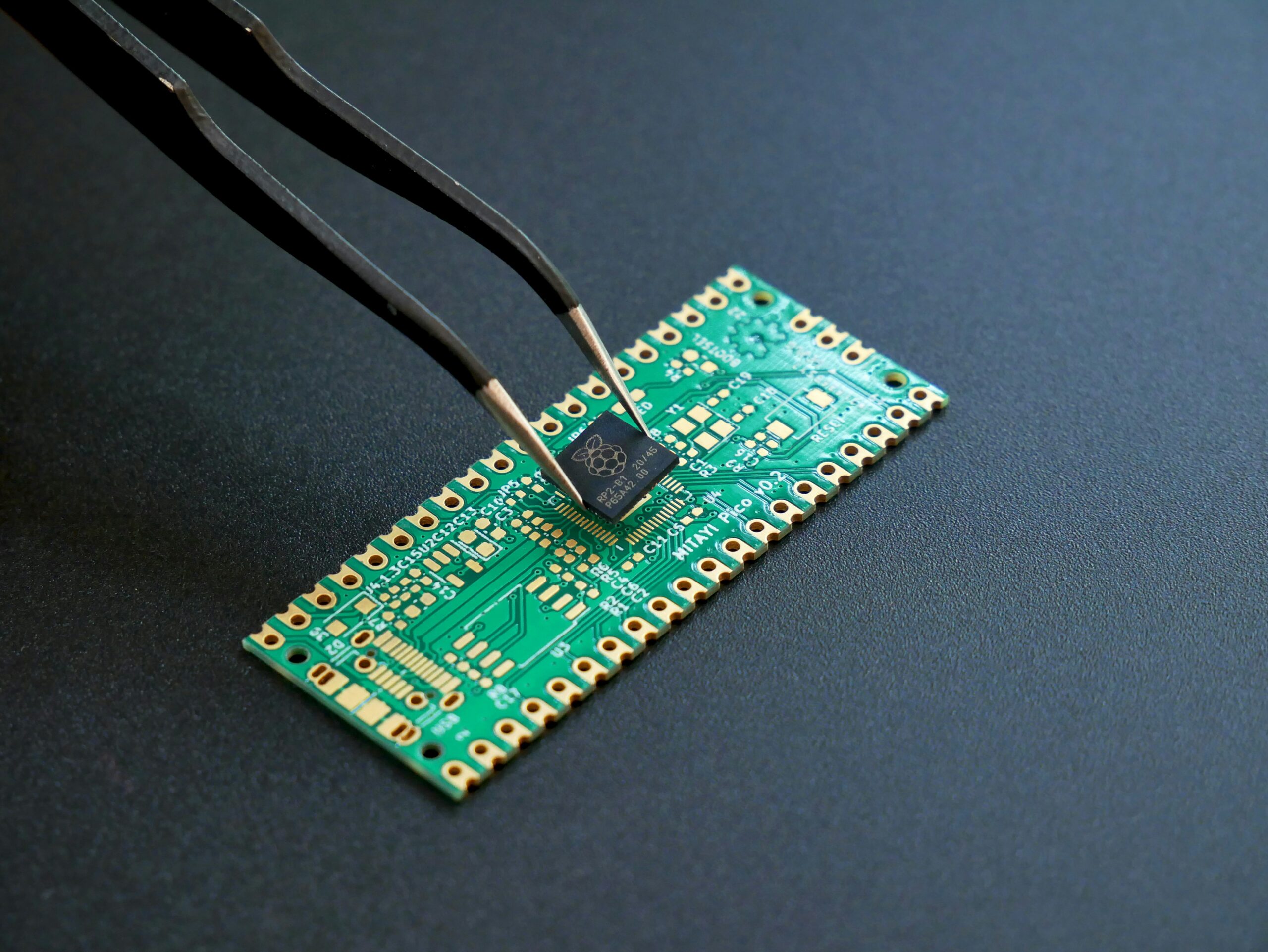
From smart home devices and industrial automation systems to medical equipment and automotive electronics, microcontrollers are at the heart of countless modern innovations. These compact computing devices enable machines to process data, make decisions, and perform tasks efficiently.
What is a Microcontroller?
A microcontroller is a compact integrated circuit designed to control specific operations within an embedded system. It combines a processor, memory, and input/output peripherals on a single chip, making it ideal for dedicated applications.
Popular microcontroller families include:
- Arduino
- STM32
- PIC Microcontrollers
- ESP32
- AVR Series
- ARM Cortex-Based Controllers
Key Features
- Compact and Cost-Effective Design
- Low Power Consumption
- Real-Time Processing
- Built-in Memory and Peripherals
- Easy Integration with Sensors and Devices
Applications
Microcontrollers are widely used in:
- Smart Appliances
- Consumer Electronics
- Automotive Systems
- Healthcare Devices
- Industrial Automation
- IoT Solutions
Future Outlook
As connected devices continue to grow, microcontrollers are becoming more powerful, energy-efficient, and intelligent. Advanced processors with AI capabilities are enabling smarter embedded solutions across industries.
Conclusion
Microcontrollers serve as the foundation of embedded technology, enabling devices to perform complex functions with precision and efficiency. Their versatility continues to drive innovation in today’s connected world.